Since I’ve called Boston home for so many years, it only felt right to start my travel journey here. I’ve always loved the city and its history, and no matter where my travels take me next, Boston will always hold a special place in my heart.
Follow the 2.5 Mile Red Brick Line
Boston’s Freedom Trail is a vibrant tapestry of American history woven through the heart of one of the nation’s most historic cities. Whether you’re a history buff, a curious traveler, or a local looking to rediscover your roots, this 2.5-mile red-brick trail offers a captivating journey through time.
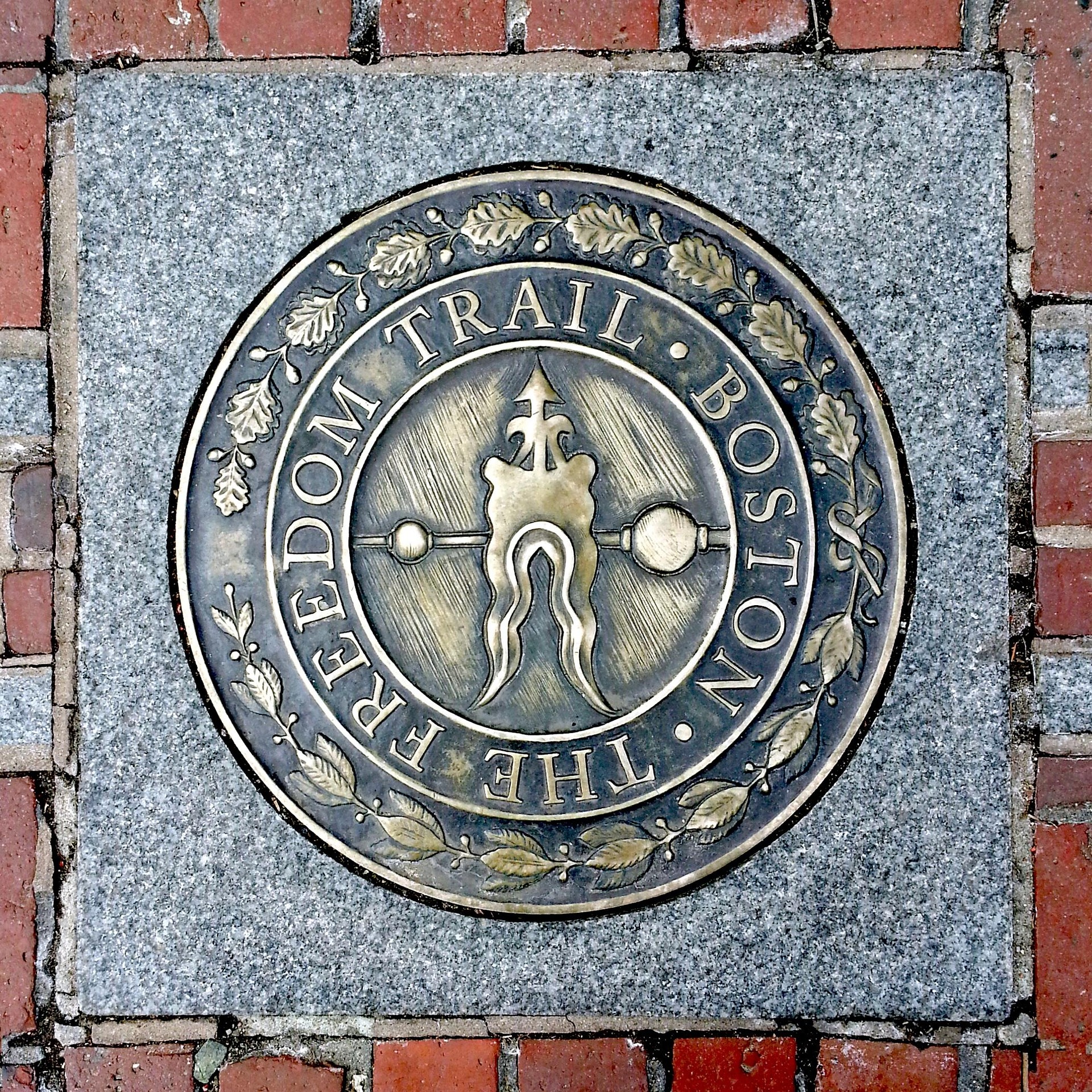
Grab your walking shoes, and let’s dive into some of the most important points along the Freedom Trail with an exhilarating blend of detail and enthusiasm!
1. Boston Common:
Our adventure begins at Boston Common, America’s oldest public park, established in 1634. Imagine the lively gatherings, protests, and celebrations that have taken place here over the centuries. As you stand on this lush expanse, you’re treading the same ground as colonial militia, revolutionaries, and countless other figures who shaped the nation.
2. Massachusetts State House:
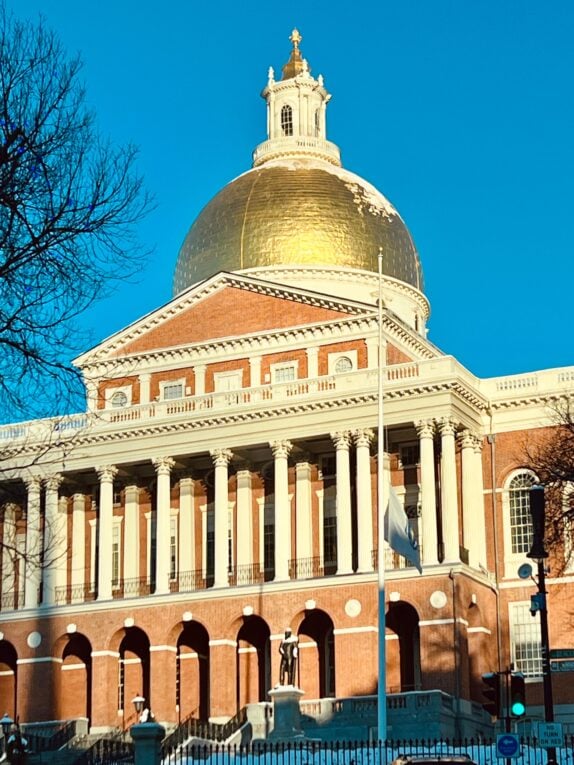
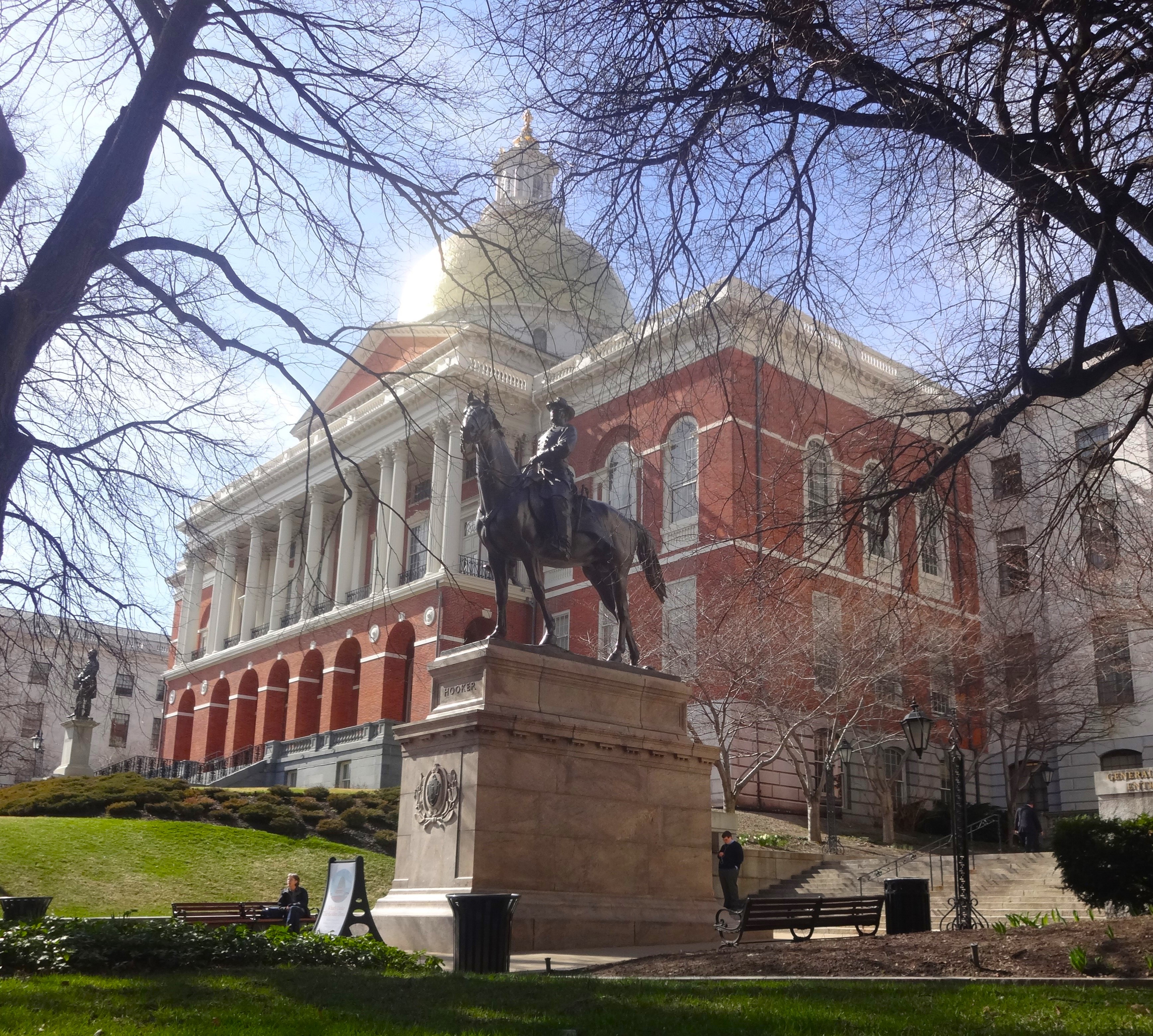
Gleaming with its iconic gold dome, the Massachusetts State House is a stunning example of Federal architecture. Completed in 1798, it serves as a beacon of democracy. Don’t miss the chance to witness the “Sacred Cod,” a symbol of the state’s economic history.
3. Granary Burying Ground:
Step into the shadows of history at the Granary Burying Ground. Here lie the graves of legendary patriots like Paul Revere, Samuel Adams, and John Hancock. Their stories of courage and conviction echo through time, inspiring generations.
4. King’s Chapel and Burying Ground:
Both a cemetery and a church, King’s Chapel offers a hauntingly beautiful glimpse into the past. The church’s stone architecture and box pews are a testament to colonial elegance. Pay respects to Mary Chilton, believed to be the first woman to step ashore from the Mayflower.
5. Old South Meeting House:
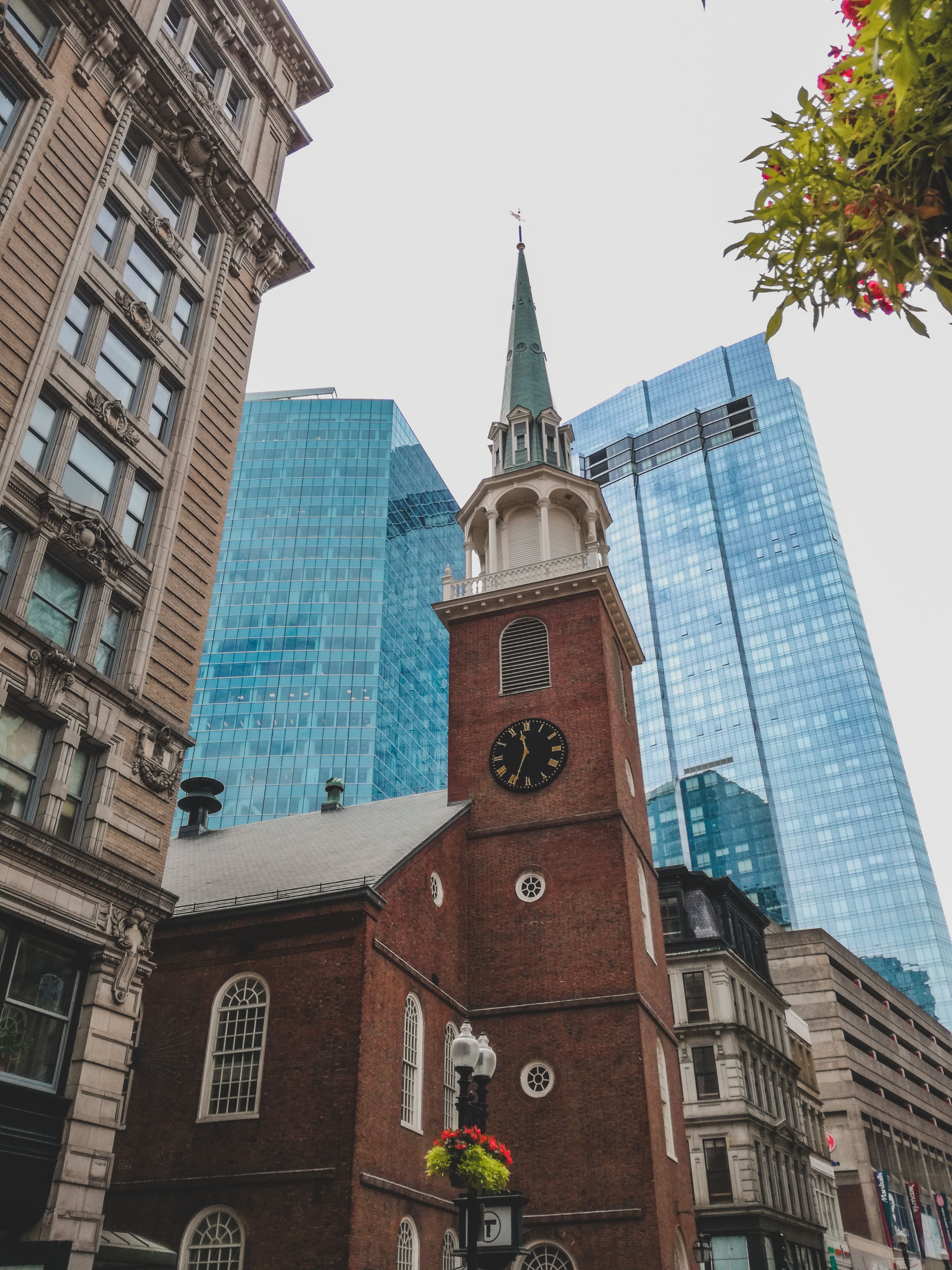
A pivotal site for the Boston Tea Party, the Old South Meeting House is where passionate patriots rallied against oppressive British policies. Feel the fervor of revolution as you stand in the very room where freedom was debated and defended.
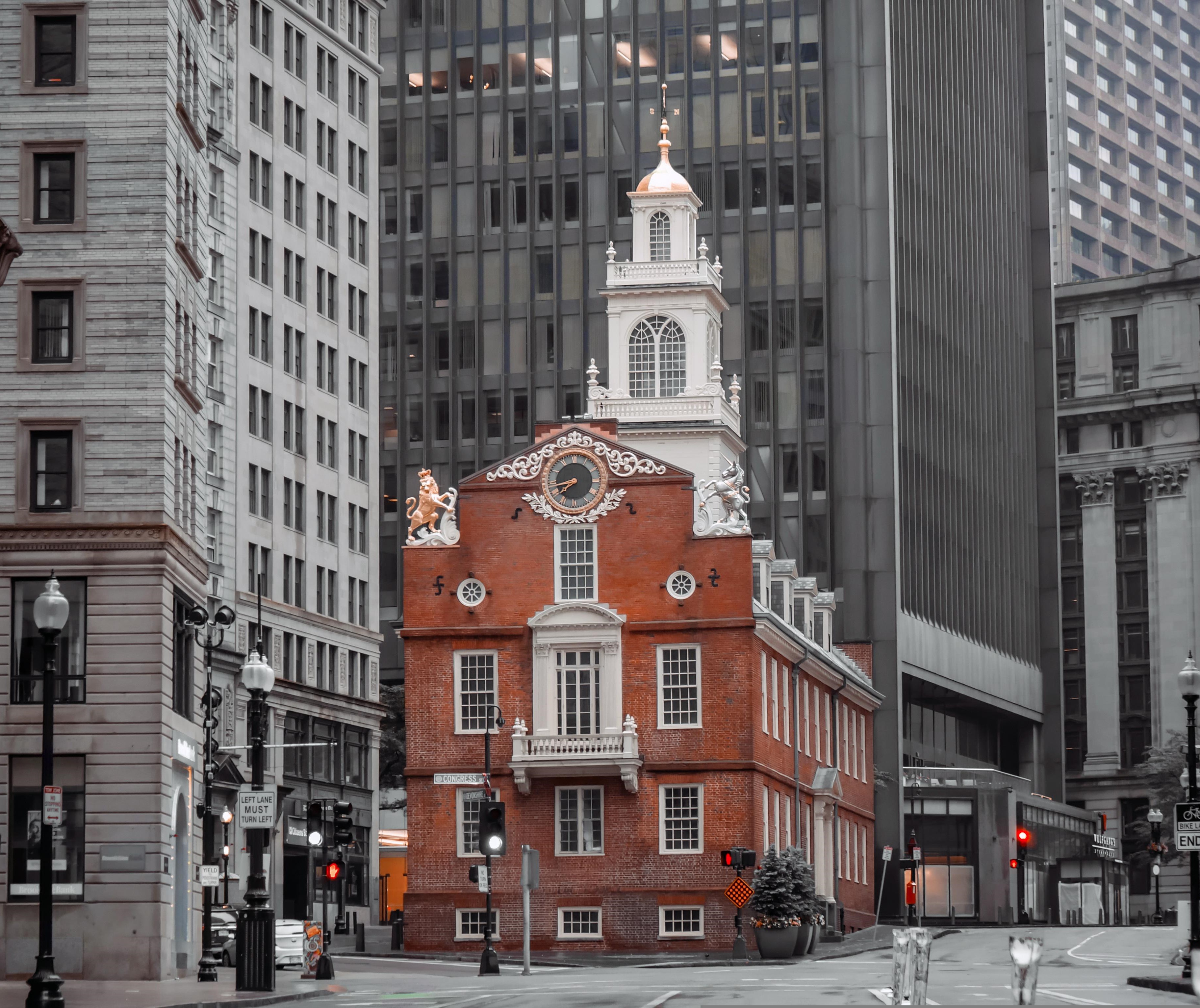
6. Old State House:
The Old State House witnessed the fiery sparks of revolution, including the Boston Massacre. Its balcony proclaimed the Declaration of Independence to an eager Bostonian crowd in 1776. This venerable building stands as a powerful symbol of independence.
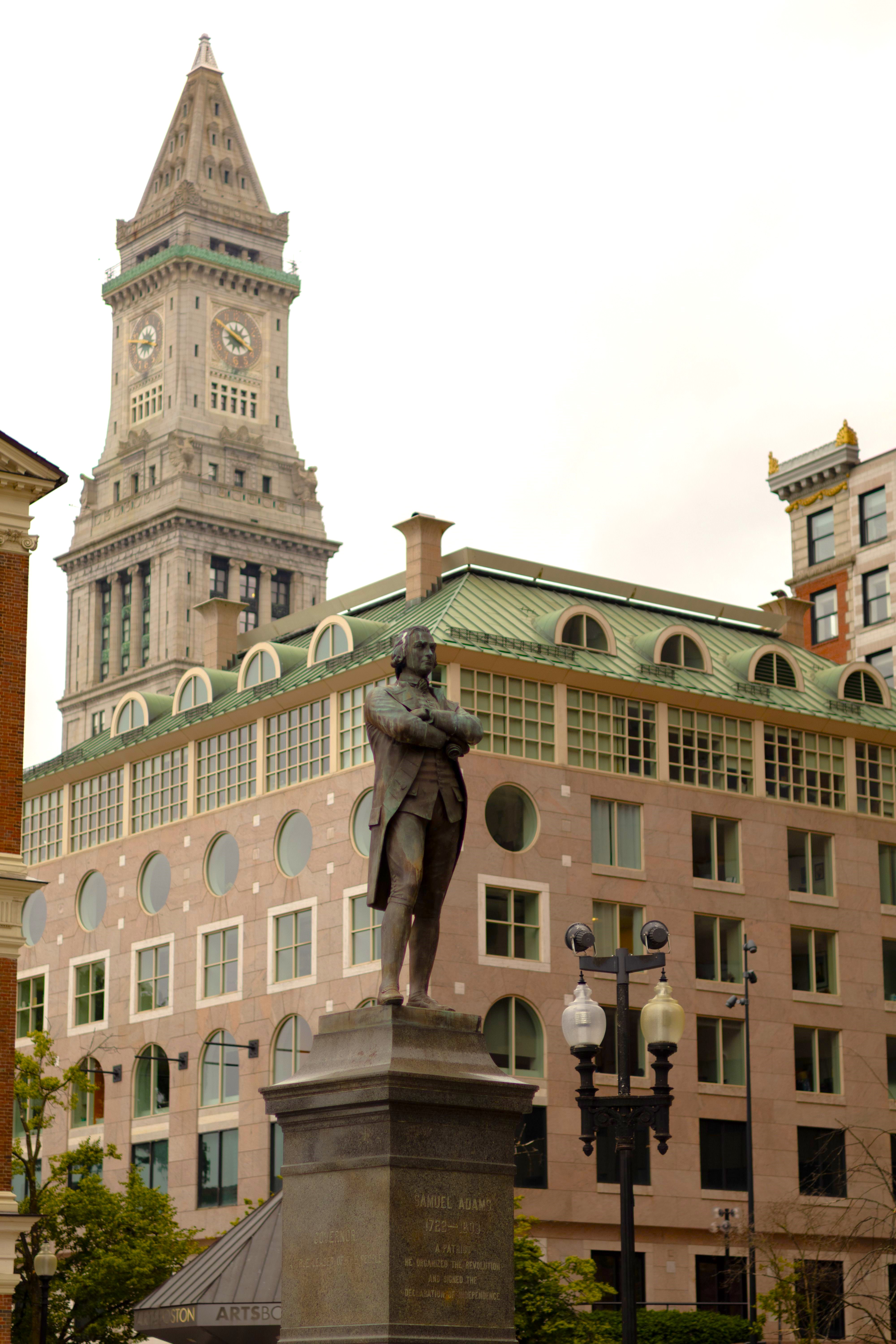
7. Samuel Adams & Faneuil Hall:
The Samuel Adams Statue honors one of Boston’s most influential patriots and Founding Fathers. A strong opponent of British rule, Adams helped organize colonial resistance and played an important role in the American Revolution.
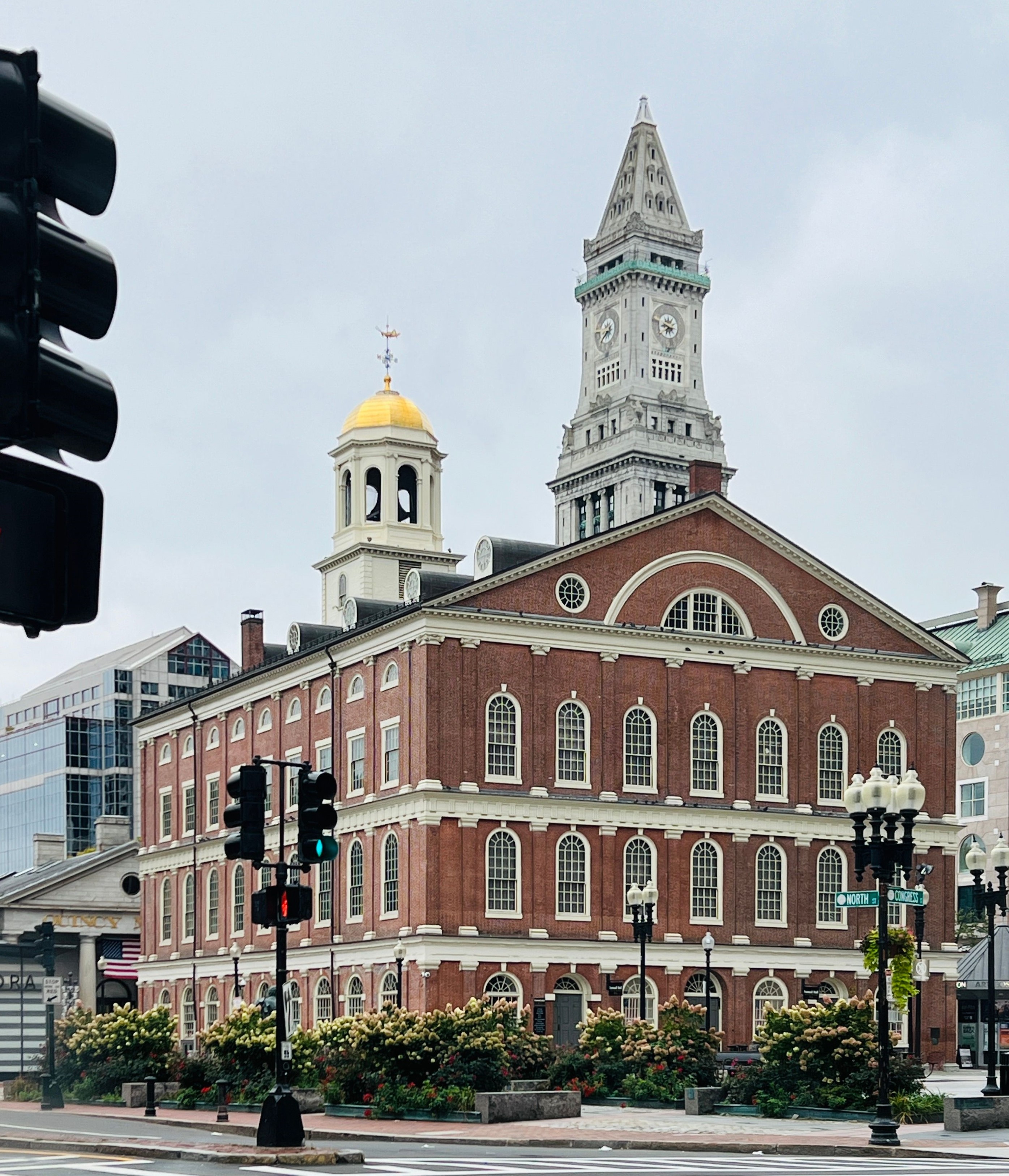
Behind the statue is the Faneuil Hall building, affectionately known as the “Cradle of Liberty”! This iconic landmark, a cornerstone of the Freedom Trail, has been the site of spirited debates and revolutionary fervor since 1742. Wander through its historic halls and feel the echoes of American patriots who paved the way for independence.
Quincy Market — A Great Place to Take a Break
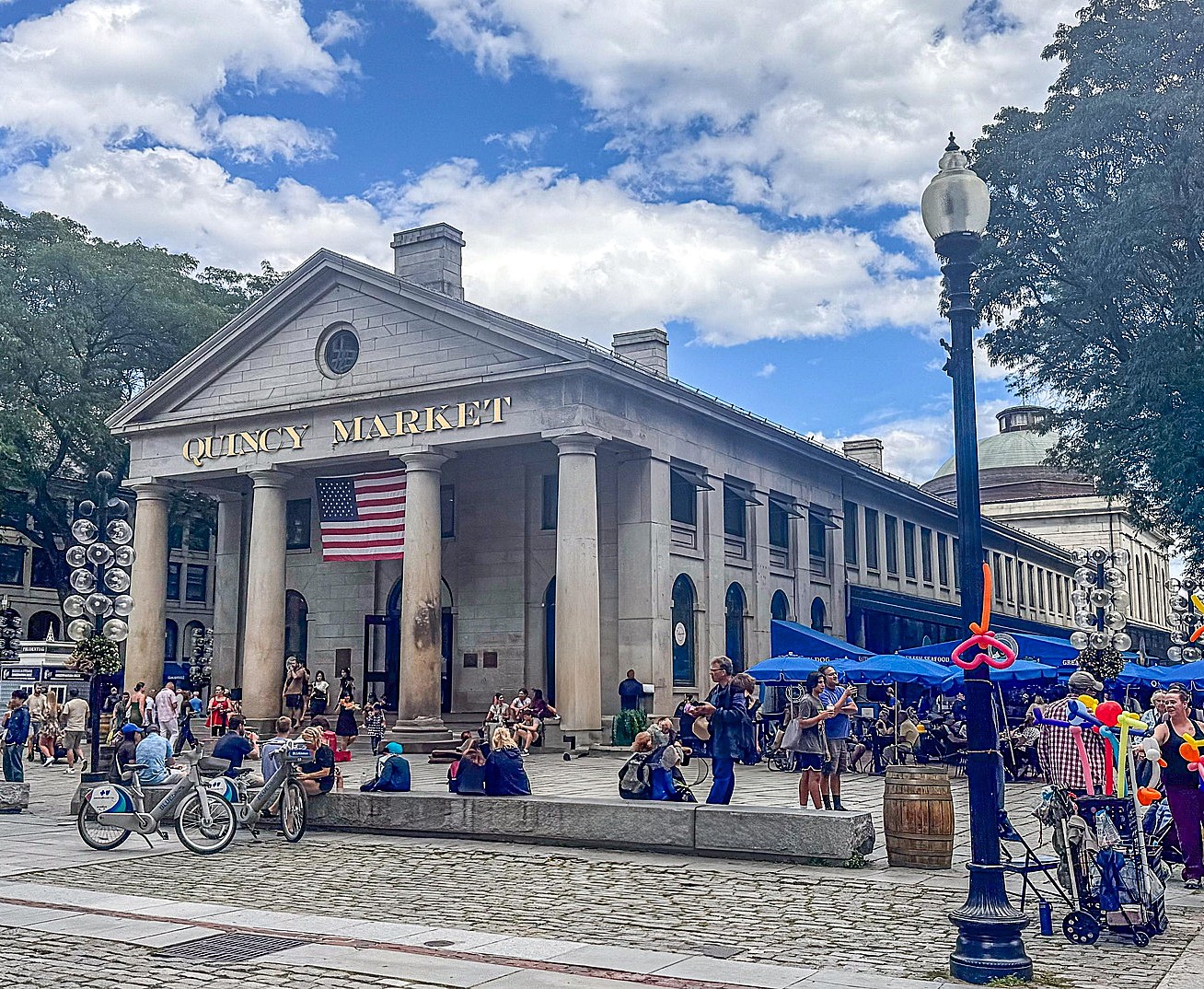
Quincy Market is not officially part of the Freedom Trail, but it’s right along the route and makes a convenient place to stop and recharge. Completed in 1826, after the American Revolution, it became a major food market and served as Boston’s food distribution center for more than 140 years.
Today, you can grab a quick snack, sit and relax, people-watch, and use the restrooms before continuing your walk. The historic granite building, with its distinctive central dome, is also worth a look.
My recommendation: If you’re looking for a full meal, I’d wait until you reach the North End, where you’ll find plenty of Italian restaurants, bakeries, and cafés. Quincy Market is better used as a convenient place to take a break and recharge before continuing the trail.
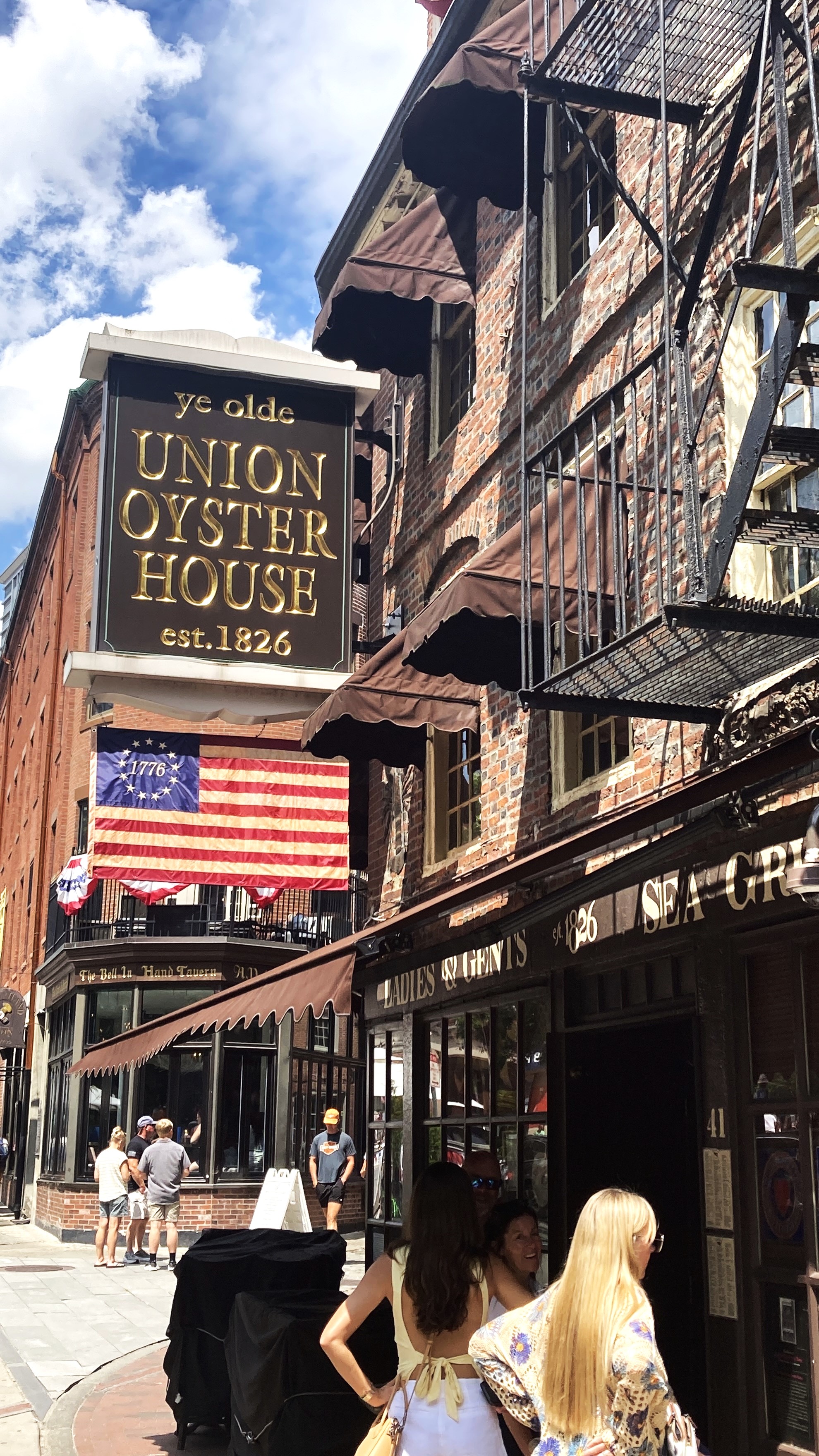
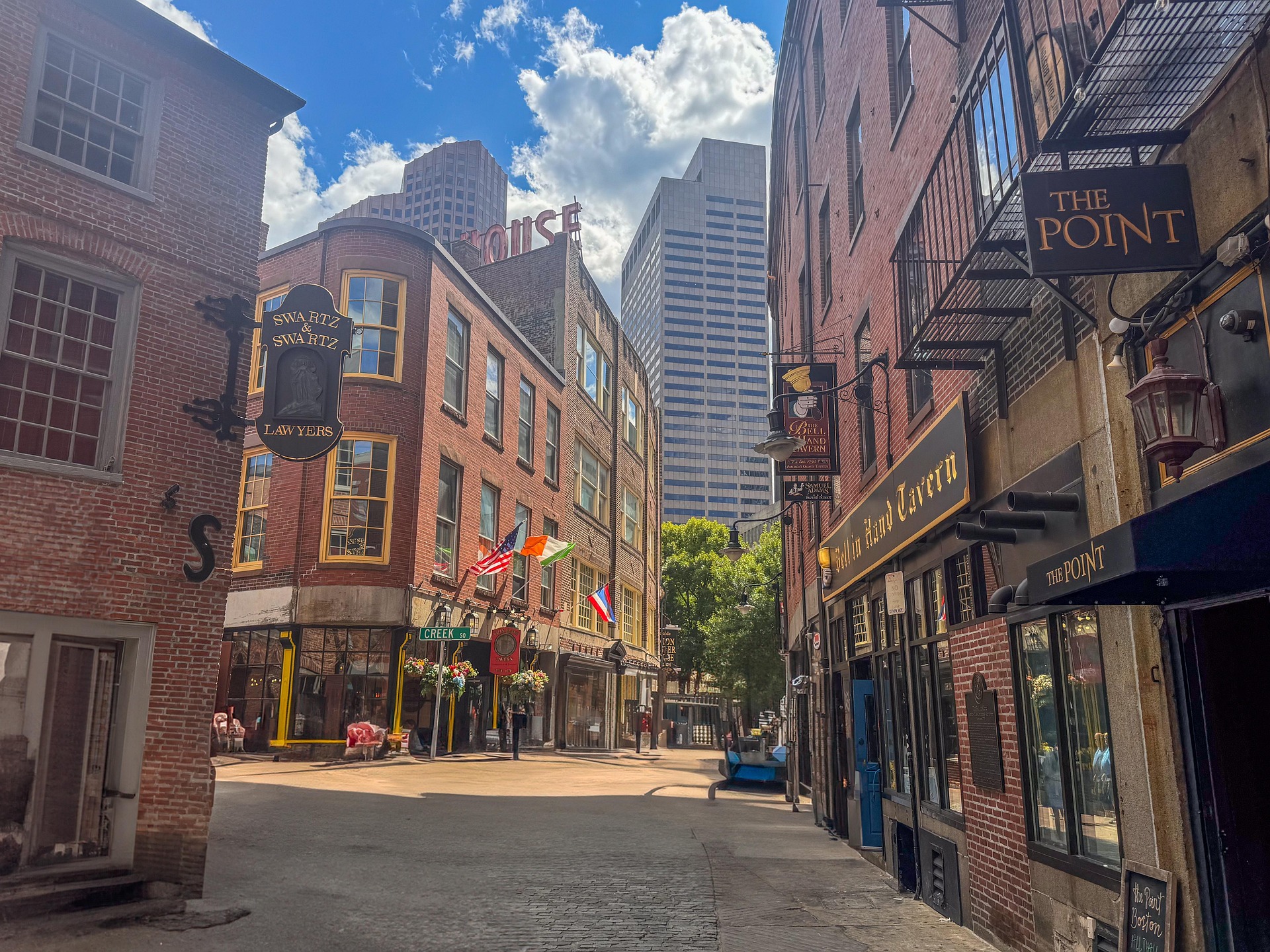
8. Union Oyster House:
Just steps from Faneuil Hall, the Union Oyster House is more than a historic restaurant. Open since 1826, it is America’s oldest continuously operating restaurant, while the building itself dates back to around 1716.
Before becoming a restaurant, it housed Patriot printer Isaiah Thomas, who published The Massachusetts Spy here from 1771 to 1775, reporting on events leading up to the American Revolution. Today, visitors can enjoy classic New England seafood while experiencing one of Boston’s oldest historic buildings.
9. Paul Revere House:
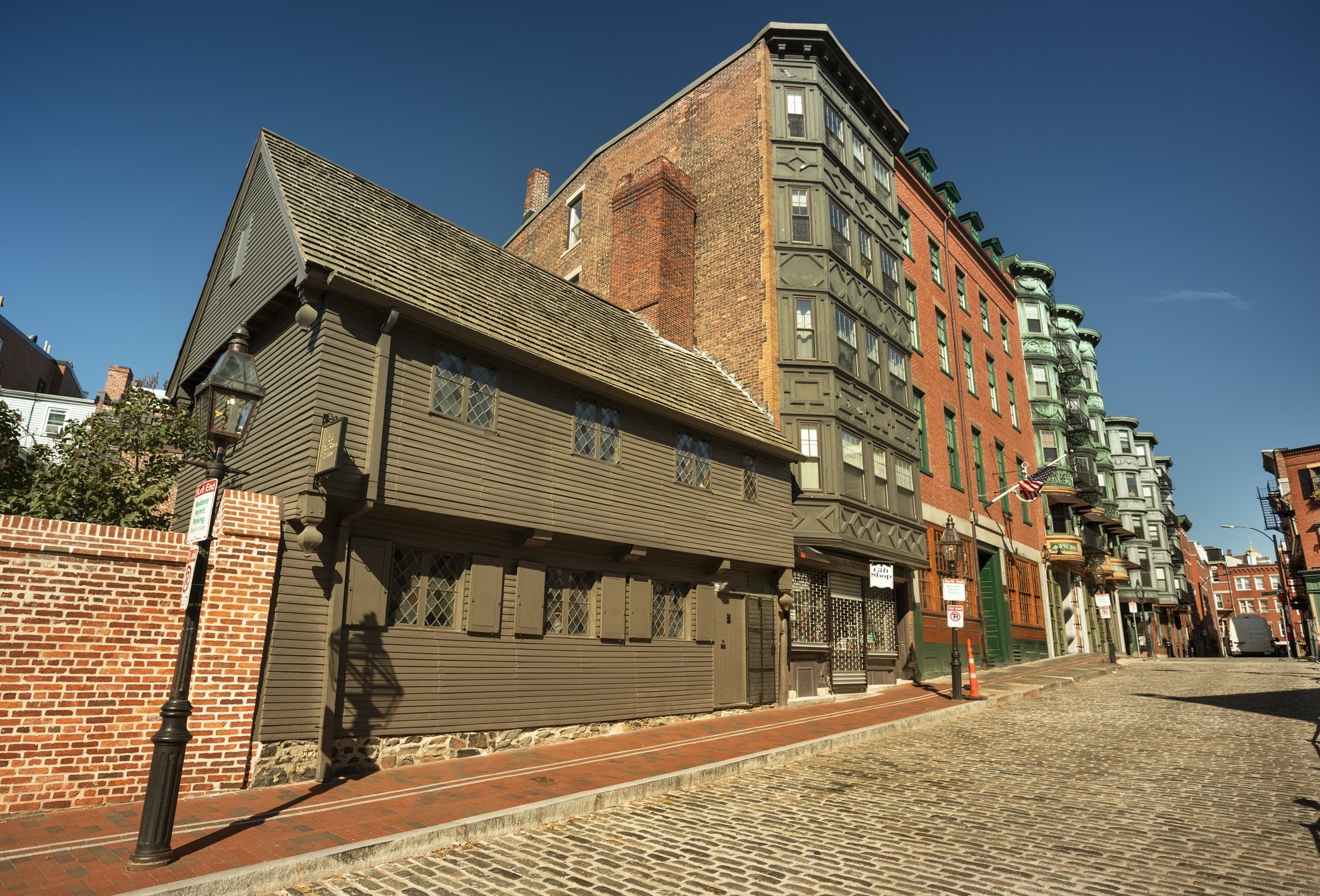
Journey to the North End and step into the modest home of Paul Revere. This preserved structure offers a personal look into the life of the legendary midnight rider. Discover the man behind the myth and explore artifacts from his life and times.
10. Paul Revere & Old North Church:
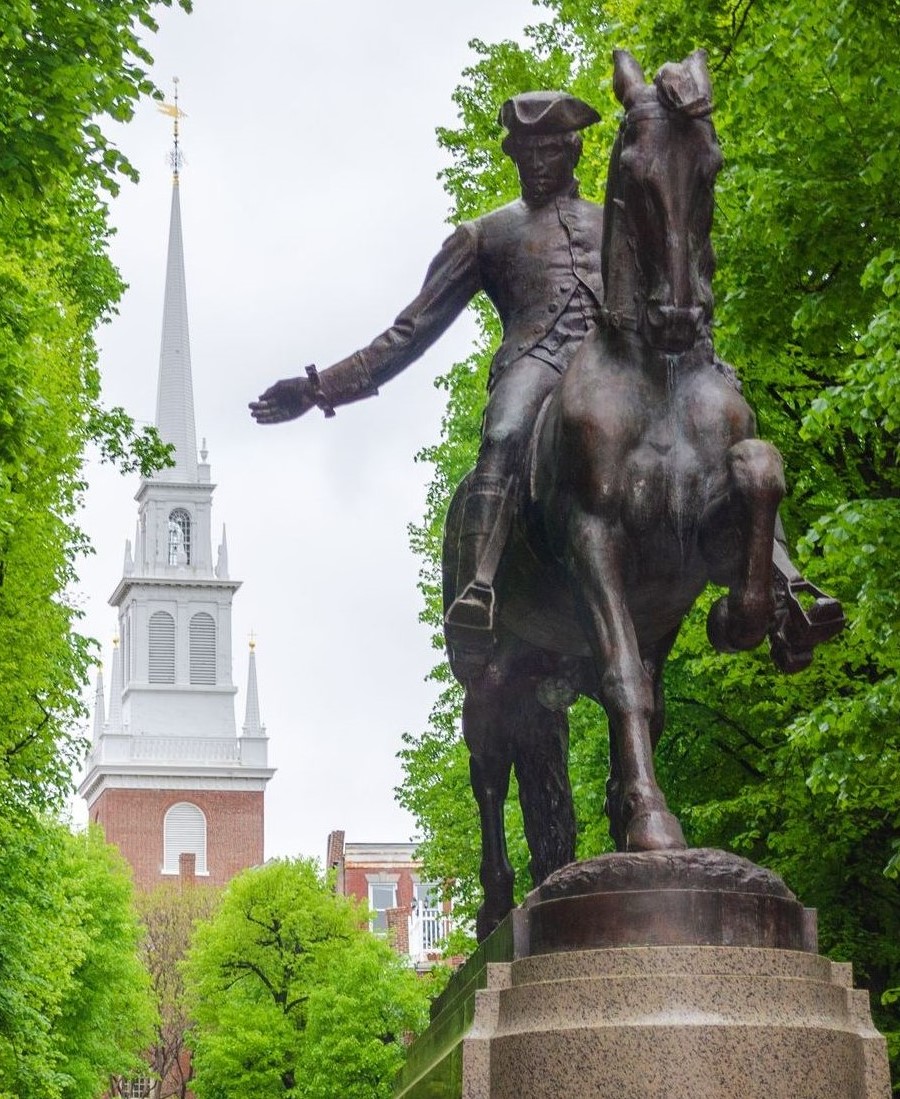
In Boston’s North End, a bronze statue of Paul Revere on horseback commemorates his famous Midnight Ride.
Paul Revere was a Boston silversmith and patriot who became famous for his ride in 1775, when he helped warn colonists that British troops were on the move and alerted local militias before the Battles of Lexington and Concord.
Behind the statue stands the Old North Church, where two lanterns were hung in 1775 as a signal that British troops were crossing the Charles River by boat. Built in 1723, it is Boston’s oldest standing church.
11. Copp’s Hill Burying Ground:
A little further from the Old North Church, you’ll get to Copp’s Hill Burying Ground, established in 1659. It is one of Boston’s oldest cemeteries and the final resting place of many prominent figures from Boston’s colonial era. During the American Revolution, the hill also played a strategic role, as British troops used it as a vantage point during the Battle of Bunker Hill.
What About the Last Two Stops?
The Bunker Hill Monument and USS Constitution are the final two stops along the Freedom Trail and, in my opinion, two of its biggest attractions.
From the Copp’s Hill Burying Ground, it’s about another mile to reach them. You can continue following the brick trail through Charlestown and complete the entire route in one day, or save these historic sites for another day.
If you have time, I recommend the latter. Both attractions have enough history and significance to warrant more than a quick visit, so giving them their own day lets you experience them without feeling rushed.
Copp’s Hill or the Old North Church is a great place to end your day. Both are located in Boston’s North End, where you’ll find yourself surrounded by one of the city’s most vibrant Italian communities, with countless restaurants to choose from. Grab a great Italian meal, explore the neighborhood, then come back another day to visit the Bunker Hill Monument and the USS Constitution.
Get Up and Experience it Yourself!
Don’t just read about history—experience it! Plan your visit to Boston’s Freedom Trail and walk in the footsteps of revolutionaries. Each site tells a unique story of courage, democracy, and the unyielding quest for freedom.
Whether you’re tracing the roots of the American Revolution or simply enjoying a stroll through picturesque Boston, the Freedom Trail promises an unforgettable adventure. Lace up your shoes, embrace the spirit of exploration, and immerse yourself in the stories that built a nation.
Time of the Year
For the best experience, visit between May and October, preferably Wednesday through Sunday. This gives you pleasant walking weather while maximizing the number of historic sites that are open.
Give yourself at least a few hours to walk the trail, and allow extra time if you plan to tour the historic buildings along the way. There’s much more to see than simply following the red brick line!
Getting to the Freedom Trail
By Public Transportation:
The Freedom Trail is easy to reach by Boston’s MBTA “T” subway system. Take the Red Line or Green Line to Park Street Station. The Boston Common Visitor Information Center and starting point of the trail is only about 100 yards from the station.
From Boston Logan Airport:
The Silver Line SL1 runs directly from all Logan Airport terminals to South Station. From South Station, you can take the Red Line to Park Street Station.
By Car or Rideshare:
You can drive, take a taxi, or use a rideshare service such as Uber or Lyft at 139 Tremont Street as your destination. There is also a parking garage beneath Boston Common.

Leave a Reply